
What Is Automotive AI?
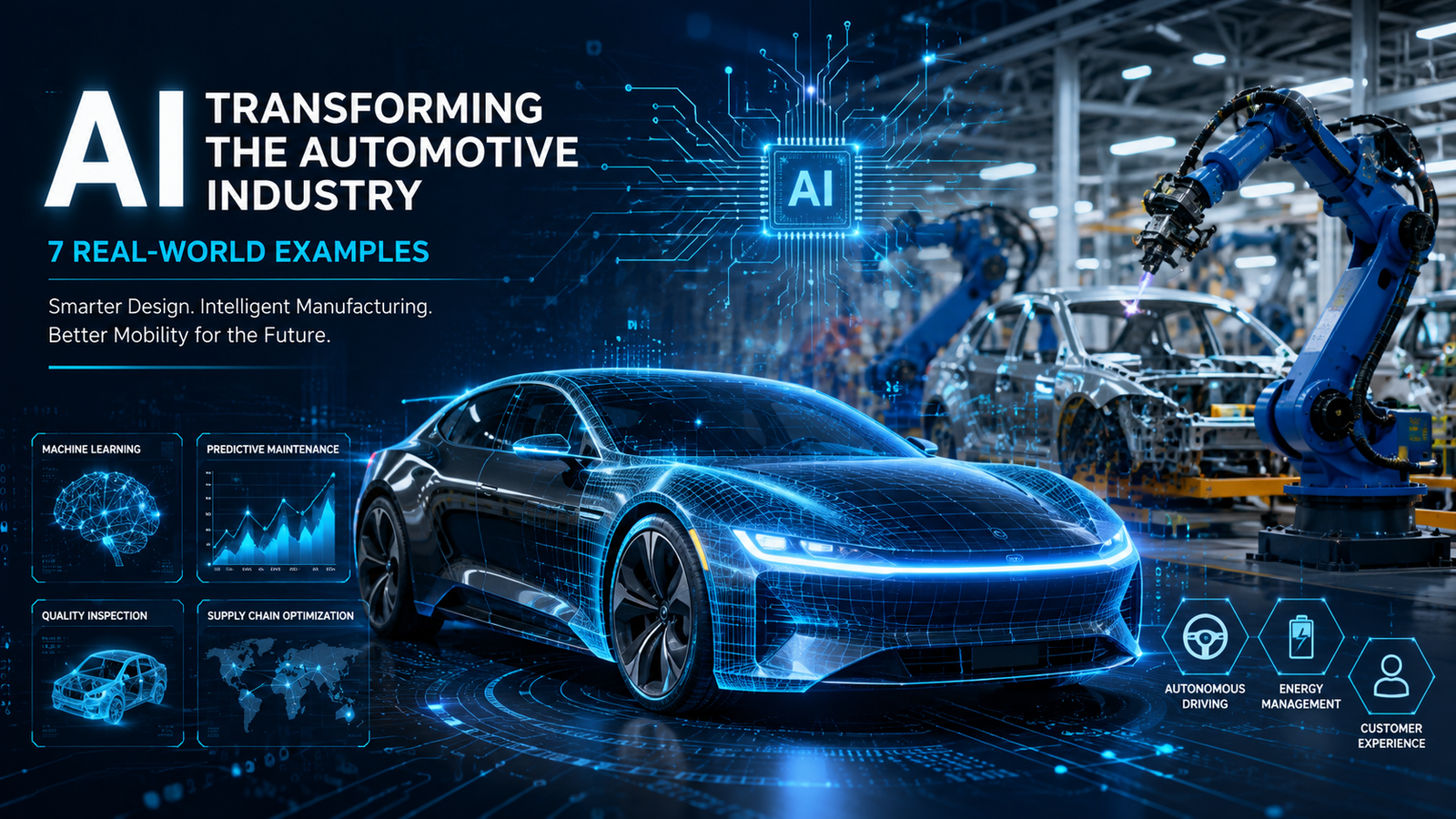
Automotive AI is rapidly transforming how vehicles are designed, manufactured, maintained, and experienced. From vehicle design and manufacturing to predictive maintenance and autonomous driving, AI is changing how cars are developed, produced, and experienced.
Major automakers such as Tesla, Toyota, Hyundai, BMW, Mercedes-Benz, and General Motors are investing billions of dollars in AI technologies to improve quality, reduce costs, increase production efficiency, and deliver smarter mobility solutions. At the same time, automotive suppliers are using AI to optimize supply chains, detect manufacturing defects earlier, and enhance overall operational performance.
As someone who has spent more than 20 years working in the automotive industry, I have witnessed how digital transformation has accelerated across engineering, manufacturing, and program management. AI is becoming an essential business tool rather than simply another emerging technology.
In this article, we’ll explore seven practical examples of how Automotive AI is reshaping today’s automotive industry and why Automotive AI will continue to influence manufacturers, suppliers, and consumers over the coming decade.
1. AI in Vehicle Design
Automotive AI is transforming the way vehicles are designed long before they reach the production line. Instead of relying solely on traditional engineering methods, automakers now use AI-powered software to evaluate thousands of possible design options within a short period of time.
One of the most significant applications is Generative Design. Engineers define performance requirements such as weight, strength, material, and manufacturing constraints, while AI automatically generates hundreds or even thousands of optimized design alternatives. This approach reduces development time while producing lighter and stronger components.
Another important technology is the Digital Twin. A digital twin is a virtual replica of a physical vehicle or component that allows engineers to simulate real-world conditions before building a prototype. By combining AI with simulation data, manufacturers can identify potential design issues earlier, reducing both development costs and time to market.
Leading automotive companies are already using these technologies. General Motors has collaborated with Autodesk to develop AI-generated vehicle components that are significantly lighter while maintaining structural strength. BMW uses AI-driven simulations throughout its product development process, while Hyundai Motor Group is expanding digital engineering technologies to accelerate vehicle development.
For automotive suppliers, AI-assisted design also improves collaboration with customers. Engineers can evaluate different material options, optimize component geometry, and predict manufacturing feasibility much earlier in the development process. This results in faster design validation, fewer engineering changes, and improved product quality.
As AI continues to evolve, vehicle design will become increasingly data-driven, enabling manufacturers to create safer, lighter, and more efficient vehicles with shorter development cycles.
2. Automotive AI in Smart Manufacturing
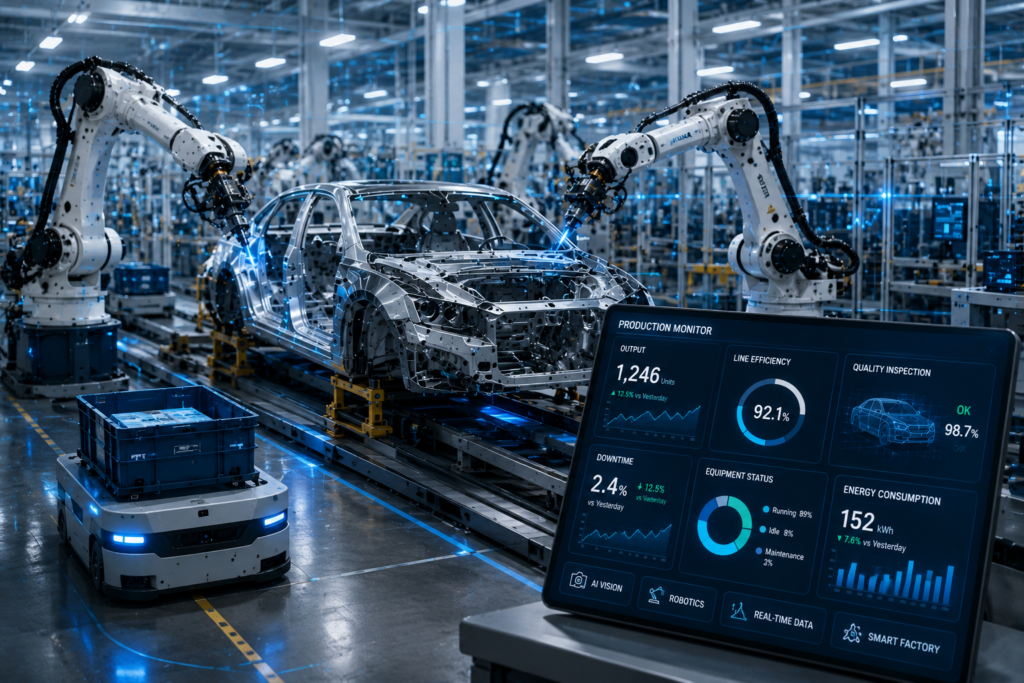
Automotive AI is revolutionizing modern manufacturing by making production lines smarter, faster, and more efficient. Instead of reacting to problems after they occur, manufacturers now use AI to predict issues before they impact production.
One of the most valuable applications is predictive maintenance. AI continuously analyzes data collected from machines, robots, and sensors to identify abnormal patterns that may indicate equipment failure. Maintenance teams can repair or replace components before unexpected breakdowns occur, reducing costly downtime.
AI-powered computer vision systems have also become essential in quality inspection. High-resolution cameras combined with deep learning algorithms can detect tiny defects in vehicle bodies, welds, paint surfaces, and assembled components with remarkable accuracy. These systems operate consistently and significantly reduce the possibility of human error.
Leading automotive manufacturers are investing heavily in smart factories. Tesla uses AI-driven automation throughout its Gigafactories to optimize battery and vehicle production. Toyota integrates AI into manufacturing processes to improve production efficiency and support continuous improvement initiatives. Hyundai Motor Group is expanding smart factory technologies across its global manufacturing network to enhance quality and operational performance.
For automotive suppliers, AI provides additional benefits by improving production scheduling, inventory management, and process optimization. Real-time production data enables manufacturers to make faster decisions, minimize waste, and respond more effectively to changing customer demand.
As Industry 4.0 continues to evolve, AI-powered manufacturing will become one of the key competitive advantages for automotive companies seeking higher productivity, lower costs, and improved product quality.
3. AI in Predictive Maintenance
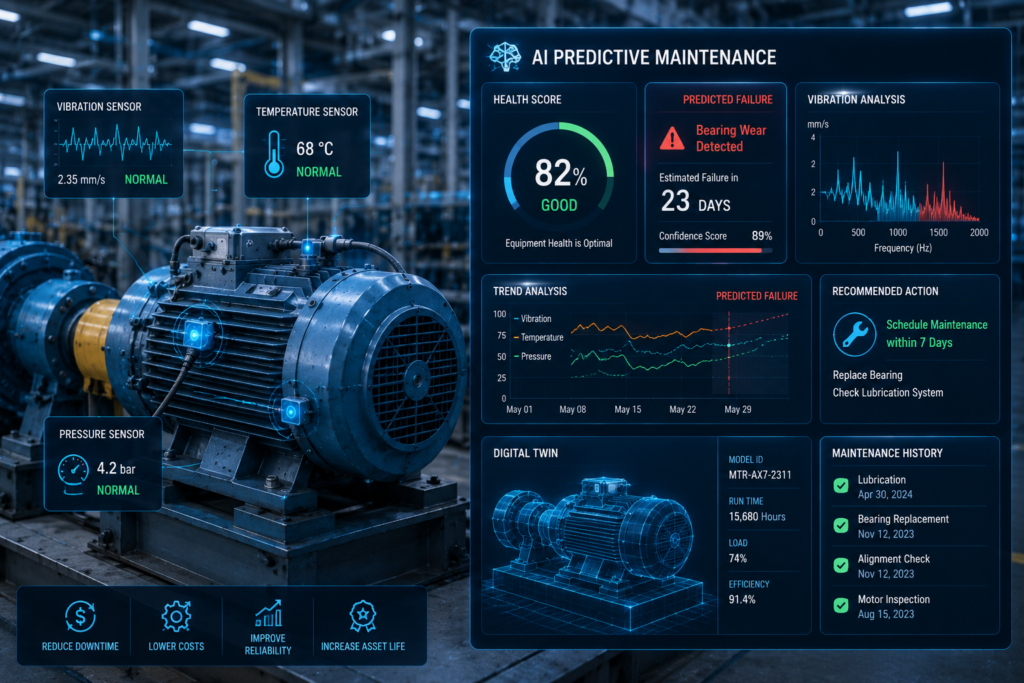
Unexpected equipment failures can cost automotive manufacturers millions of dollars each year. Artificial intelligence is changing maintenance strategies from reactive repairs to predictive maintenance, allowing companies to identify potential failures before they occur.
Modern production equipment generates enormous amounts of operational data through vibration sensors, temperature monitors, pressure gauges, and machine controllers. AI analyzes these datasets continuously, identifying abnormal patterns that human operators may never notice.
One of the best-known examples comes from BMW, which has expanded the use of AI and digital factory technologies to monitor production equipment and optimize manufacturing operations. The company combines AI with digital twins and factory simulation to improve production planning and reduce operational risks.
Another major supplier, Bosch, is investing billions of euros in artificial intelligence to improve manufacturing efficiency, predictive maintenance, and industrial automation. Bosch is also collaborating with technology partners to bring AI into factory operations and next-generation mobility solutions.
AI-powered predictive maintenance provides several measurable benefits:
- Reduced unplanned downtime
- Lower maintenance costs
- Longer equipment life
- Higher Overall Equipment Effectiveness (OEE)
- Improved production quality
For automotive suppliers, predictive maintenance is equally valuable. Injection molding machines, welding robots, leak-testing equipment, and automated assembly systems can all be monitored continuously using AI. Instead of following fixed maintenance schedules, manufacturers can service equipment only when data indicates it is actually needed.
As factories become increasingly connected through Industry 4.0 technologies, predictive maintenance is expected to become a standard capability across automotive manufacturing worldwide.
4. AI in Autonomous Driving & ADAS
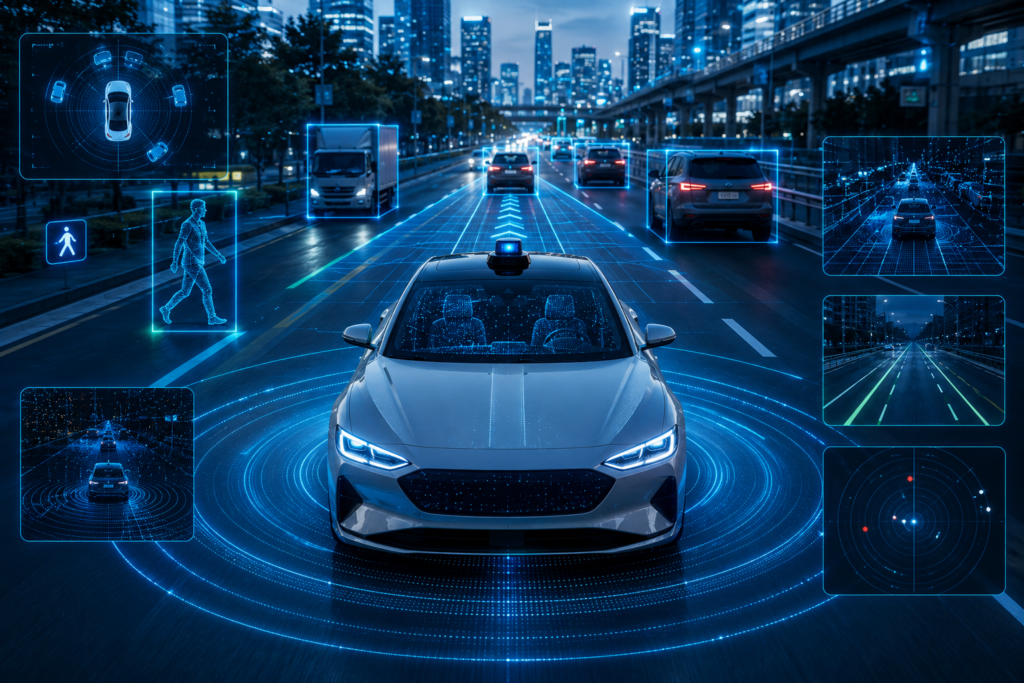
Automotive AI is the core technology behind autonomous driving and advanced driver assistance systems. Modern vehicles continuously collect enormous amounts of data from cameras, radar, LiDAR, ultrasonic sensors, and GPS. AI processes this information in real time, enabling vehicles to recognize road conditions, detect obstacles, and make driving decisions within milliseconds.
One of the most important AI applications is computer vision. Deep learning models identify pedestrians, traffic signs, lane markings, cyclists, and surrounding vehicles with remarkable accuracy. This allows ADAS features such as Lane Keeping Assist, Automatic Emergency Braking (AEB), Adaptive Cruise Control (ACC), and Traffic Sign Recognition to operate reliably under various driving conditions.
Another key technology is sensor fusion, where AI combines data from multiple sensors to improve accuracy and reduce uncertainty. Even if one sensor performs poorly due to rain, fog, or darkness, AI can integrate information from other sensors to maintain safe vehicle operation.
Several global automakers are leading AI-driven autonomous vehicle development.
- Tesla uses neural networks trained on billions of miles of real-world driving data through its Full Self-Driving (FSD) system.
- Mercedes-Benz became one of the first manufacturers to receive regulatory approval for Level 3 autonomous driving in selected regions with its DRIVE PILOT system.
- General Motors developed its Super Cruise system, recognized as one of the most advanced hands-free highway driving technologies.
- Hyundai Motor Group continues expanding AI-based ADAS technologies across Hyundai, Kia, and Genesis models while investing heavily in autonomous driving research through Motional.
For automotive suppliers, AI also accelerates ADAS component validation, sensor calibration, functional safety testing, and software verification. AI-powered simulation environments can evaluate millions of driving scenarios that would be impossible to reproduce through physical testing alone.
As regulations continue to evolve, AI will play an even greater role in achieving safer roads, reducing traffic accidents, and enabling higher levels of autonomous mobility.
Real-World Example
Tesla FSD
Tesla continuously improves its Full Self-Driving software by collecting real-world driving data from millions of vehicles worldwide. Neural networks analyze this data to improve object detection, lane recognition, and driving decisions through over-the-air software updates.
Mercedes-Benz DRIVE PILOT
Mercedes-Benz became the first automaker to receive international certification for Level 3 autonomous driving under specific traffic conditions. AI manages driving tasks while continuously monitoring surrounding vehicles and road conditions.
Hyundai Motor Group
Hyundai Motor Group is accelerating autonomous driving development through Motional, a joint venture focused on robotaxi technology and AI-powered autonomous mobility solutions.
Key Takeaway
AI is rapidly transforming autonomous driving from driver assistance to fully intelligent mobility by combining computer vision, sensor fusion, and continuous learning from real-world driving data.
5. AI in Supply Chain & Logistics

Artificial intelligence is transforming automotive supply chains by making them more connected, predictable, and resilient. As global vehicle production depends on thousands of suppliers across multiple countries, AI enables manufacturers to manage complex logistics networks with greater speed and accuracy.
One of the most valuable applications is AI-powered demand forecasting. Machine learning algorithms analyze historical sales, market trends, seasonal demand, economic indicators, and customer behavior to predict future production requirements. This allows manufacturers to optimize procurement, reduce inventory costs, and avoid material shortages.
Another important application is inventory optimization. AI continuously monitors inventory levels, supplier performance, warehouse capacity, and transportation schedules to recommend the optimal inventory strategy. This reduces excess stock while ensuring critical components remain available for production.
AI also plays a major role in logistics optimization. Intelligent routing systems evaluate traffic conditions, weather, transportation costs, and delivery schedules in real time to determine the most efficient shipping routes. This improves on-time delivery performance while reducing fuel consumption and logistics expenses.
Leading automotive companies are increasingly investing in AI-driven supply chain management.
- Toyota uses AI and digital supply chain technologies to improve production planning and supplier collaboration.
- BMW Group leverages predictive analytics to optimize global parts distribution and warehouse operations.
- Volkswagen Group applies AI to monitor logistics networks, detect supply disruptions, and improve inventory visibility.
- Tesla integrates AI into production scheduling and global parts planning to support its rapidly expanding manufacturing capacity.
For automotive suppliers, AI improves supplier risk assessment, material planning, cost forecasting, and delivery performance. AI can identify potential supply chain disruptions before they occur, allowing purchasing and logistics teams to prepare alternative sourcing strategies and minimize production risks.
As supply chains become increasingly global and complex, AI will continue to play a critical role in improving operational efficiency, reducing costs, and strengthening supply chain resilience.
Real-World Example
Toyota
Toyota combines AI with its renowned Toyota Production System (TPS) to improve demand forecasting, supplier collaboration, and production scheduling across its global manufacturing network.
Volkswagen Group
Volkswagen uses AI-powered analytics to monitor global logistics operations, identify bottlenecks, and respond more quickly to supply chain disruptions.
Tesla
Tesla applies AI to synchronize production schedules, supplier deliveries, and battery supply planning across Gigafactories, enabling faster manufacturing and inventory optimization.
Key Takeaway
AI enables automotive manufacturers and suppliers to build smarter, faster, and more resilient supply chains through predictive planning, intelligent logistics, and real-time decision-making.
6. AI in Quality Inspection
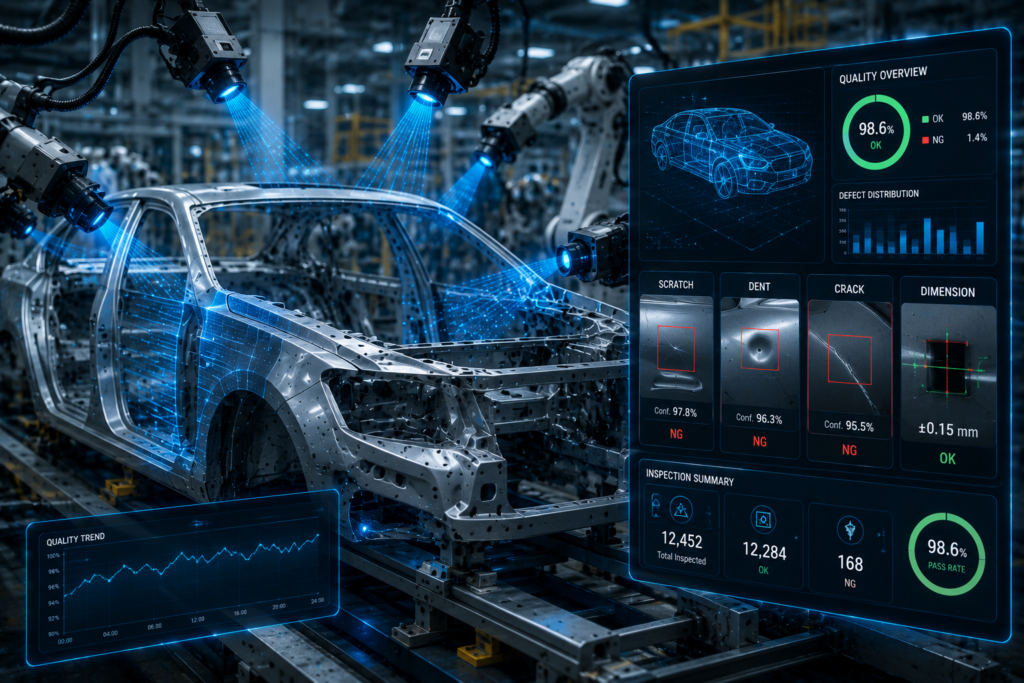
Artificial intelligence is transforming quality inspection by making defect detection faster, more accurate, and more consistent than traditional manual inspection. Modern automotive manufacturing generates thousands of components every hour, making it increasingly difficult for human inspectors to identify every defect with complete accuracy.
One of the most significant applications is AI-powered computer vision. High-resolution industrial cameras combined with deep learning algorithms can automatically inspect vehicle bodies, fuel tanks, welds, painted surfaces, plastic components, and electronic assemblies. AI identifies even the smallest scratches, dents, cracks, dimensional deviations, and surface imperfections with remarkable precision.
Another major advancement is real-time defect classification. Instead of simply detecting whether a defect exists, AI can classify the defect type, determine its severity, and recommend corrective actions. This enables production teams to respond immediately before defective products move to the next manufacturing process.
Leading automotive manufacturers are already integrating AI into quality control systems.
- BMW Group uses AI-powered vision systems to inspect vehicle paint quality and detect microscopic surface defects.
- Mercedes-Benz applies AI to monitor assembly quality and automatically verify component installation during production.
- Toyota continues expanding intelligent visual inspection systems to improve manufacturing consistency while reducing human error.
- Tesla uses machine vision and deep learning to inspect battery production, body assembly, and final vehicle quality throughout its Gigafactories.
For automotive suppliers, AI inspection significantly improves first-pass yield, reduces scrap, minimizes customer claims, and supports traceability requirements. AI systems can continuously learn from new production data, improving inspection accuracy over time without requiring extensive manual programming.
As AI vision technology continues to evolve, quality inspection will become increasingly autonomous, enabling manufacturers to achieve higher product quality while reducing inspection costs and production downtime.
Real-World Example
BMW Group
BMW employs AI-powered cameras capable of identifying tiny paint defects that are nearly impossible for the human eye to detect consistently.
Tesla Gigafactory
Tesla integrates deep learning vision systems into battery cell production and final vehicle assembly, enabling continuous quality monitoring with minimal manual inspection.
Toyota
Toyota combines AI inspection with continuous improvement principles (Kaizen) to reduce defect rates while maintaining high manufacturing standards across global plants.
Key Takeaway
AI-powered computer vision enables automotive manufacturers to achieve faster inspections, higher accuracy, lower defect rates, and more consistent product quality than traditional manual inspection methods.
7. AI in Customer Experience & After-Sales Service
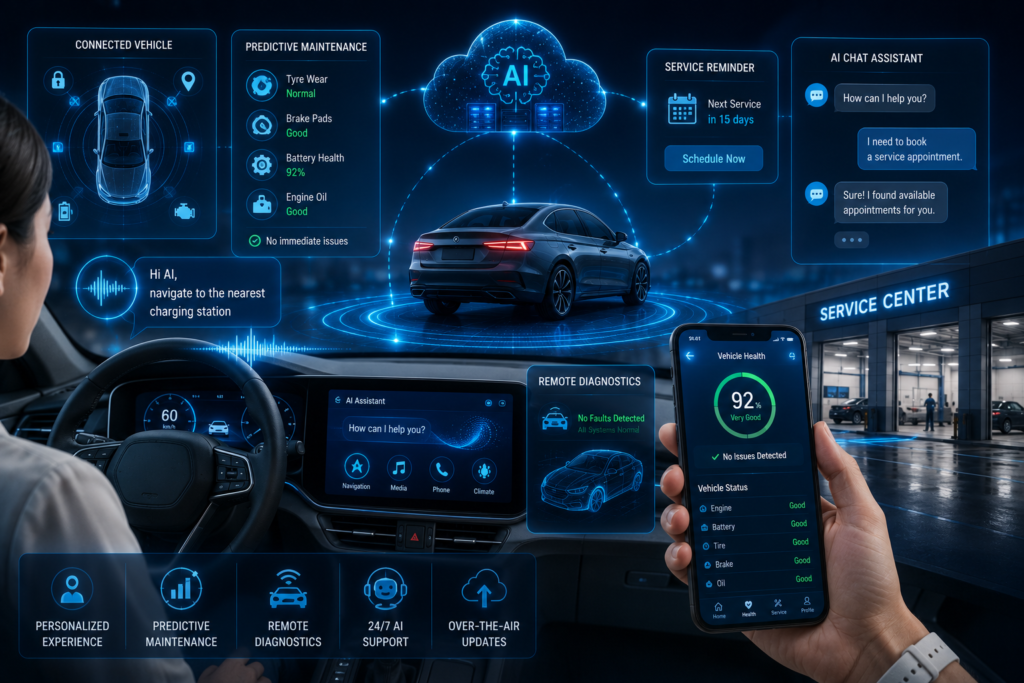
Artificial intelligence is reshaping the customer experience long after a vehicle leaves the production line. From personalized digital assistants to predictive maintenance notifications, AI enables automakers to provide faster, smarter, and more convenient services throughout the entire vehicle ownership journey.
One of the most visible applications is AI-powered virtual assistants. Modern vehicles increasingly feature intelligent voice assistants capable of understanding natural language commands. Drivers can control navigation, climate settings, entertainment systems, and vehicle functions using conversational AI, improving both convenience and driving safety.
Another important innovation is predictive after-sales service. AI continuously monitors vehicle health by analyzing sensor data collected from connected vehicles. Instead of waiting for components to fail, AI can predict potential maintenance requirements and notify drivers before problems become serious. This reduces unexpected breakdowns while improving vehicle reliability and customer satisfaction.
AI is also transforming customer support. Intelligent chatbots and service platforms provide instant assistance for appointment scheduling, warranty inquiries, software updates, and technical support. These systems are available 24/7 and significantly reduce response times while improving the overall ownership experience.
Leading automotive manufacturers continue expanding AI-driven customer services.
- Mercedes-Benz integrates the MBUX intelligent voice assistant, allowing drivers to interact naturally with their vehicles through conversational AI.
- Tesla delivers over-the-air (OTA) software updates that continuously improve vehicle performance, safety, and user experience without requiring dealership visits.
- BMW combines AI with connected vehicle services to provide predictive maintenance alerts and personalized driving recommendations.
- Hyundai Motor Group is expanding connected car platforms and AI-based mobility services to deliver smarter digital experiences for Hyundai, Kia, and Genesis customers.
For automotive suppliers, AI also improves customer support by enabling remote diagnostics, warranty trend analysis, and field quality monitoring. By analyzing service data collected from vehicles worldwide, suppliers can identify recurring issues earlier and implement corrective actions before problems become widespread.
As connected vehicles become increasingly intelligent, AI will continue transforming customer relationships from reactive service to proactive, personalized mobility experiences.
Real-World Example
Tesla
Tesla’s over-the-air software updates continuously improve battery management, safety systems, user interface features, and autonomous driving capabilities without requiring customers to visit service centers.
Mercedes-Benz
The MBUX Voice Assistant allows drivers to communicate naturally with the vehicle, providing navigation assistance, climate control, and personalized vehicle settings using conversational AI.
Hyundai Motor Group
Hyundai’s connected vehicle ecosystem integrates AI-powered remote diagnostics, predictive maintenance notifications, and digital mobility services to enhance customer convenience.
Key Takeaway
AI is transforming automotive customer experience by enabling connected vehicles, predictive maintenance, intelligent virtual assistants, and personalized digital services throughout the vehicle lifecycle.
Conclusion
Automotive AI is no longer a future concept it has become one of the most important technologies driving the automotive industry’s transformation.
From vehicle design and smart manufacturing to predictive maintenance, autonomous driving, supply chain optimization, quality inspection, and customer experience, AI is improving nearly every stage of the automotive value chain.
For manufacturers, AI delivers higher productivity, better quality, lower costs, and faster innovation. For suppliers, it enhances engineering efficiency, manufacturing performance, and operational resilience. For customers, it provides safer vehicles, smarter mobility, and more personalized ownership experiences.
As AI technologies continue to evolve, companies that successfully integrate artificial intelligence into their products and operations will gain a significant competitive advantage in the rapidly changing automotive market.
The future of Automotive AI will be driven by rapid advances in artificial intelligence, and organizations that adopt these technologies early will be better positioned to lead the next generation of mobility innovation.
Automotive AI is not only changing vehicles and manufacturing—it is also changing how business leaders make decisions. For a practical executive perspective, explore our Executive AI Series, starting with AI Didn’t Make My Decision. It Challenged My Thinking.
References
McKinsey Insights: Automotive & Assembly
Frequently Asked Questions (FAQ)
Q1. How is AI used in the automotive industry?
Automotive AI is used in vehicle design, manufacturing, predictive maintenance, quality inspection, autonomous driving, supply chain optimization, and connected vehicle services. It helps manufacturers improve efficiency, reduce costs, and enhance product quality.
Q2. Which automotive companies are leading AI adoption?
Automotive AI is being adopted by companies such as Tesla, Toyota, Hyundai Motor Group, BMW, Mercedes-Benz, General Motors, and Bosch are investing heavily in AI technologies across engineering, manufacturing, and mobility services.
Q3. What are the benefits of AI for automotive suppliers?
AI helps suppliers improve product design, manufacturing quality, predictive maintenance, inventory management, production scheduling, and customer collaboration while reducing operational costs.
Q4. Will AI replace automotive engineers?
No. AI is designed to support engineers rather than replace them. Engineers use AI to automate repetitive tasks, analyze large datasets, and make better design and manufacturing decisions.
Q5. What is the future of AI in the automotive industry?
Automotive AI will become a core technology for the future automotive ecosystem.